Beyond Fitness
Progress doesn't happen in the saddle. It happens afterwards.
What you achieve in training is only half the story. The real progress – muscle growth, improved endurance, faster reaction time – only happens afterwards, even while you sleep. Anyone who regularly sleeps too little or too restlessly is essentially training against themselves: recovery fails to happen, and with it the effect of all the hard work before. Physician Lea Feder reports on this.
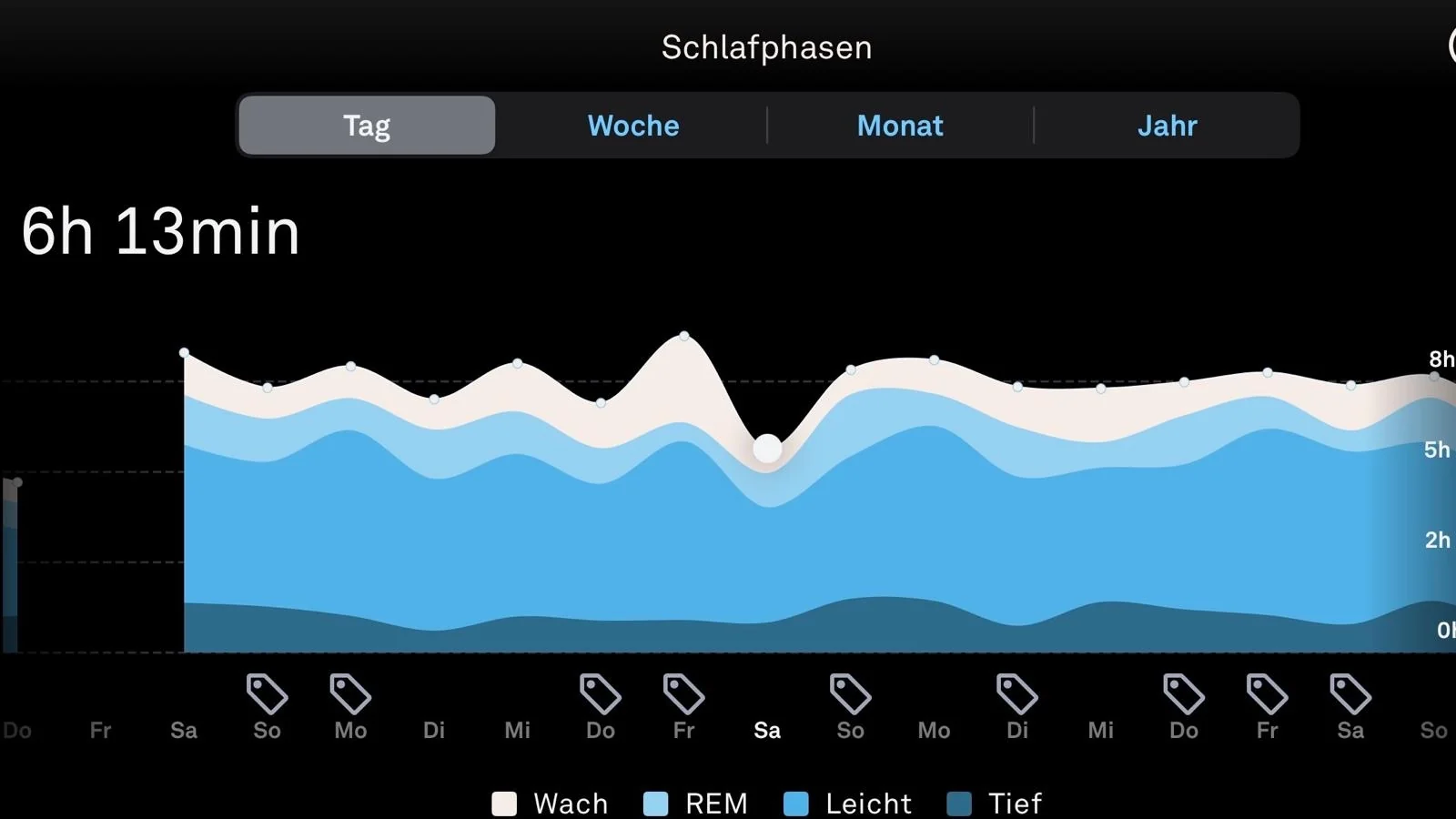
She goes on to explain that it's less about the sheer number of hours than about quality: how deeply do you really sleep, how many of your sleep cycles do you spend in restorative deep sleep, and how regular are your bedtimes in the first place? Small adjustments often make more of a difference than you'd expect – from dealing with blue light in the evening and the day's last coffee to a fixed routine that signals to your body: now we're switching off.
How closely movement and the brain are connected is shown by the video further down: a lecture by Prof. Dr. Manfred Spitzer from Ulm, one of the most renowned brain researchers in Germany, titled “Sports and the brain – what does neuroscience know?”. A fascinating look at what happens in our heads when we move – and why that goes far beyond the pure training effect.
Scroll down: that's where the video and a few PDFs to take with you are waiting.

Read on
Where you can dig deeper
Here you'll find supplementary videos and downloads on the topic. Please note: the video and PDFs are in German.